
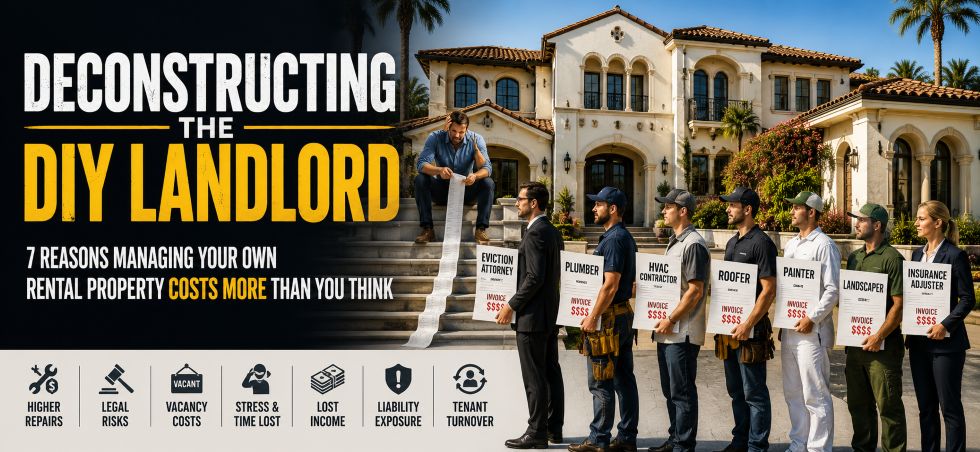
Most landlords believe they're saving money by managing their own rental property.
In reality, many are simply trading visible expenses for hidden ones.
The average landlord sees the cost of professional management and thinks, "I'll do it myself."
What they don't see are the expensive mistakes waiting around the corner.
A rental property is not a passive investment. It is a business. It requires systems, vendor relationships, legal knowledge, documentation, and risk management.
Take maintenance as an example.
Many landlords call contractors only when something breaks. Professional property managers work with vendors every day. They know who shows up, who does quality work, who carries proper insurance, and who charges a fair price.
Then there's tenant screening.
One bad tenant can create months of lost rent, property damage, legal expenses, and stress. Most landlords focus on filling a vacancy quickly. Experienced property managers focus on placing the right tenant.
Liability is another hidden risk.
Allowing tenants to make repairs, hiring unlicensed workers, mishandling security deposits, or violating fair housing laws can create significant financial exposure.
The biggest cost, however, may be opportunity cost.
Every hour spent collecting rent, coordinating repairs, scheduling vendors, and responding to tenant issues is time that could have been spent growing your portfolio, building your career, or enjoying your family.
Successful real estate investors understand leverage.
They focus on acquiring and owning assets, not becoming full-time property managers.
The goal of owning rental property is not to create another job.
The goal is to create income, build wealth, and enjoy the benefits of real estate ownership.
The smartest landlords aren't necessarily the ones who know how to manage property.
They're the ones who know when not to.